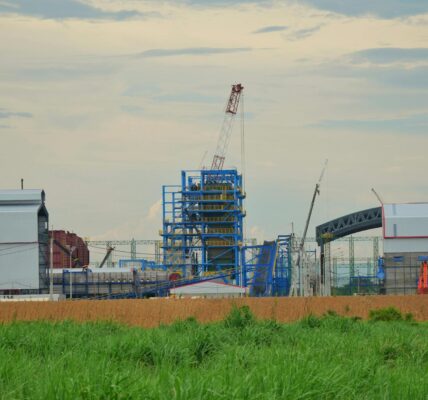

The engineering field is undergoing a seismic shift as innovative technologies emerge and reshape traditional practices. Engineers are increasingly leveraging advancements in artificial intelligence, sustainable materials, and digital technologies to enhance efficiency and effectiveness in their work. This article explores seven groundbreaking innovations that are making significant impacts across various engineering disciplines.
From civil to mechanical engineering, these innovations not only improve designs and processes but also address critical global challenges such as climate change and resource scarcity.
1. Artificial Intelligence and Machine Learning
Artificial intelligence (AI) and machine learning are revolutionizing the engineering landscape by automating complex processes and enabling predictive analytics. For instance, AI algorithms can analyze vast amounts of data from previous projects to forecast potential risks and optimize project timelines and resource allocation. As per a report by McKinsey, companies that integrate AI into their engineering processes can expect productivity increases of up to 40%.
2. 3D Printing and Additive Manufacturing
3D printing technology is transforming how engineers design and produce components. This additive manufacturing method allows for rapid prototyping and the creation of complex geometries that were previously unattainable with traditional methods. Industries such as aerospace and automotive are harnessing 3D printing to reduce material waste and speed up the production process, with some companies reporting lead time reductions of up to 75%.
3. Sustainable Engineering Materials
In response to increasing environmental concerns, engineers are exploring sustainable materials that minimize ecological impact. For example, the use of recycled plastics in construction not only diverts waste from landfills but also offers performance benefits. Engineers are developing bio-based composites that reduce reliance on petroleum products, aligning with global sustainability goals. Research from the World Economic Forum indicates that sustainable material innovations can lead to a reduction of up to 30% in carbon emissions in manufacturing processes.
4. Internet of Things (IoT)
The Internet of Things (IoT) enhances engineering through real-time data collection and analysis. Smart sensors integrated into infrastructure allow for continuous monitoring of structural health and performance, facilitating proactive maintenance and reducing failure risks. For instance, projects like smart bridges use IoT technology to gather data on stress, temperature, and traffic loads, resulting in a lifespan extension of up to 20% when properly maintained.
5. Robotics and Automation
Robots are increasingly being deployed in engineering tasks, from assembly lines to hazardous materials handling. Automation improves precision and safety while minimizing human error. For example, construction robots are now used for tasks such as bricklaying and concrete pouring, which enhances efficiency and reduces labor costs. According to a study by the International Federation of Robotics, the use of industrial robots has increased productivity by approximately 30% in various sectors.
6. Digital Twin Technology
Digital twin technology creates a virtual replica of physical assets, allowing engineers to simulate and analyze performance under different scenarios. This innovation enables teams to identify potential issues before they arise, significantly improving design accuracy and operational efficiency. For instance, in manufacturing, companies employing digital twins have reported a decrease in development time by up to 50%, resulting in faster time-to-market for new products.
7. Advanced Simulation Techniques
Simulation technology has advanced dramatically, allowing engineers to model complex systems with high accuracy. Techniques such as computational fluid dynamics (CFD) and finite element analysis (FEA) enable detailed analysis of airflow, thermal dynamics, and material behavior. These tools allow for better-informed design decisions, reducing the need for costly physical prototypes. Organizations that implement advanced simulation report a notable reduction in product development costs by 20% to 30%.
In conclusion, the engineering field is on the cusp of a transformation driven by these innovations. By embracing these technologies, engineers can not only enhance their workflow but also contribute to sustainable development and improved societal outcomes.